

Quick answer: Narrative branding is the art of crafting a clear, customer-centred brand story that people want to join. Brand storytelling gives the story its structure, and the 12 brand archetypes give it a consistent voice.
Narrative Branding in 2027: How Brand Storytelling and Archetypes Drive Modern Marketing Success
See More Informative Content
In 2027, the most effective marketing strategy is no longer built on media spend or algorithmic tricks. It is built on narrative branding: the art of crafting a clear, customer-centred brand story that people want to join.
What Story Are You Selling? A Brand Storytelling Example
A simple parable still captures the shift. A restaurant owner spent heavily on paid ads yet threw away unsold burgers every night. His father asked one question that changed everything: “What story are you selling?”
Brand Storytelling Examples: Coca-Cola, KFC and More
People forget products. They remember, and share, stories. In 2027, the same principle rules. These brand storytelling examples show how it works.
Coca-Cola
Coca-Cola does not sell sweet water. It sells celebration and belonging.
KFC
KFC does not sell chicken. It sells a colonel’s secret recipe.
Nike
Nike does not only sell shoes. Its “Just Do It” message sells courage and personal achievement.
Airbnb
Airbnb does not only sell rooms. Its “Belong Anywhere” message sells the feeling of belonging in a new place.
Dove
Dove does not only sell soap. Its Real Beauty campaign, launched in 2004, sells confidence and self-acceptance.
Why Narrative Branding and Brand Storytelling Matter in 2027
Customers Buy Transformation
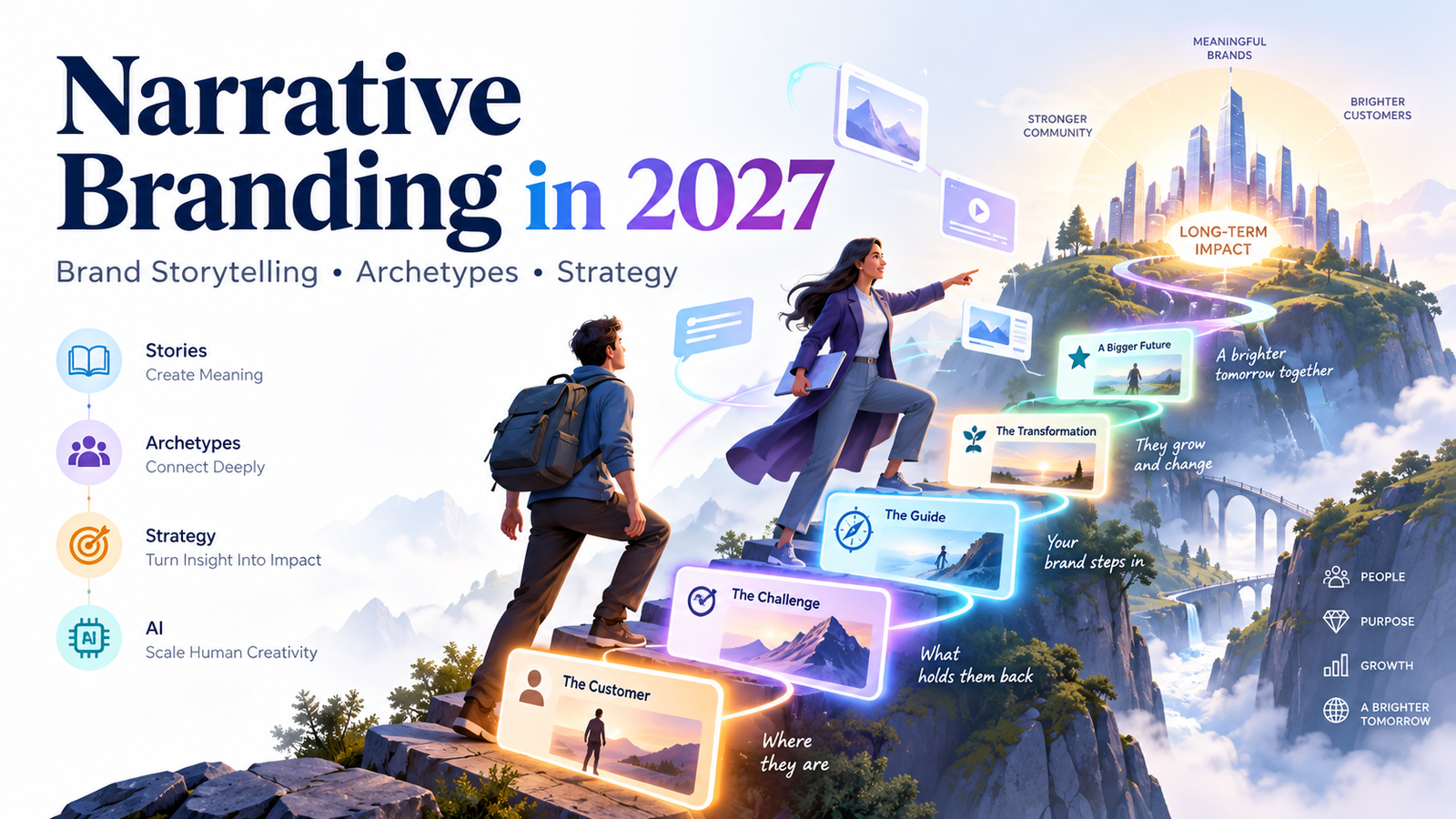
Modern consumers buy transformation, identity, and meaning. Brand storytelling places the customer as the hero and the brand as the guide.
Stories Answer the Question That Converts
This approach tends to outperform feature-focused messaging because it answers the only question that converts: “What’s in it for me?”
Proven Brand Storytelling Frameworks
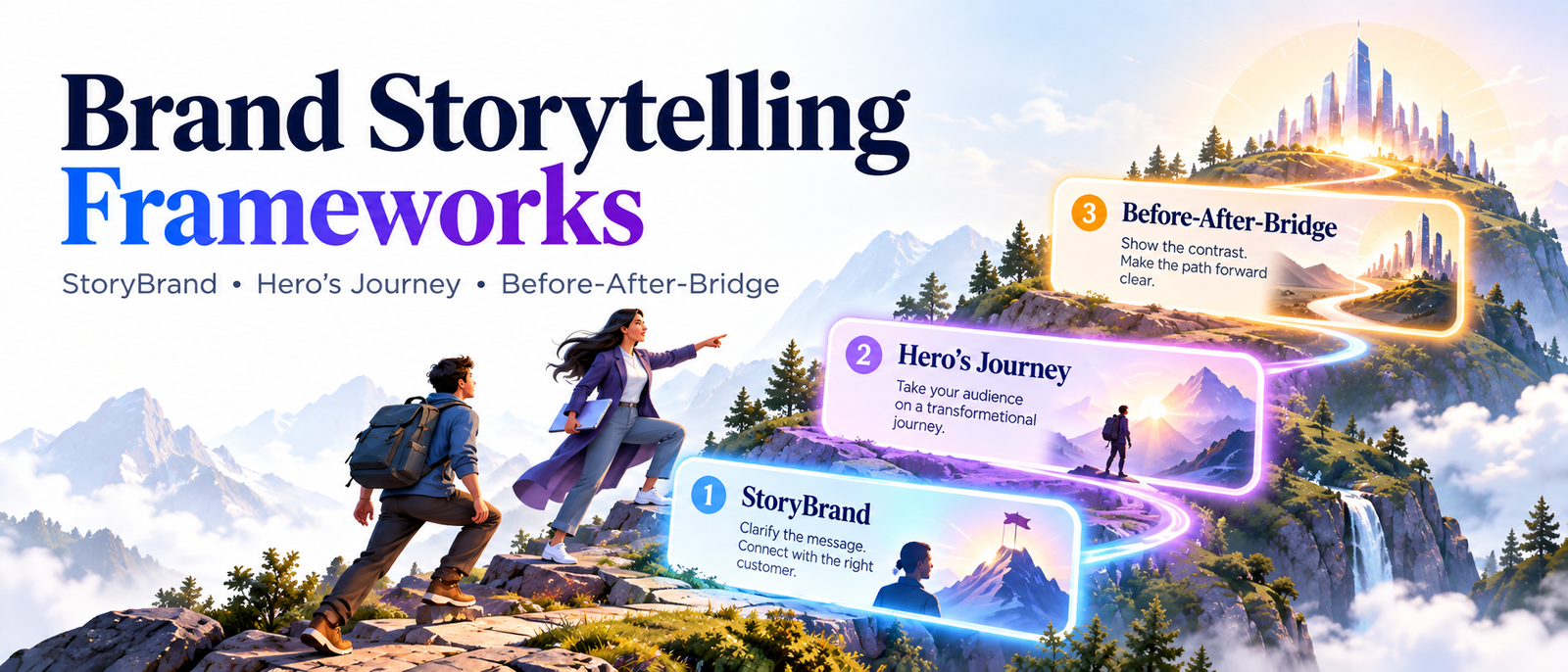
Proven narrative frameworks that still dominate marketing strategy include the three below. These structures turn vague marketing into memorable brand narratives that travel further than any paid campaign.
StoryBrand Framework
Created by Donald Miller in Building a StoryBrand (2017), the StoryBrand framework follows seven steps. The customer wants something, faces a problem, meets a guide (the brand), receives a clear plan, is called to action, avoids failure, and moves toward success.
Hero’s Journey
Based on Joseph Campbell’s monomyth. The customer leaves the ordinary world, faces trials, and returns transformed.
Before-After-Bridge
Current frustration, desired future, and the brand as the bridge.
Why Narrative Branding and Brand Storytelling Matter in 2027
Modern consumers buy transformation, identity, and meaning. Brand storytelling places the customer as the hero and the brand as the guide. This approach tends to outperform feature-focused messaging because it answers the only question that converts: “What’s in it for me?”
Proven Brand Storytelling Frameworks
Proven narrative frameworks that still dominate marketing strategy include the three below. These structures turn vague marketing into memorable brand narratives that travel further than any paid campaign.
StoryBrand Framework
Created by Donald Miller (Building a StoryBrand, 2017). The customer wants something, faces a problem, meets a guide (the brand), receives a clear plan, is called to action, avoids failure, and moves toward success.
Hero’s Journey
Based on Joseph Campbell’s monomyth. The customer leaves the ordinary world, faces trials, and returns transformed.
Before-After-Bridge
Current frustration, desired future, and the brand as the bridge.
The 12 Brand Archetypes That Give Your Story a Distinct Voice
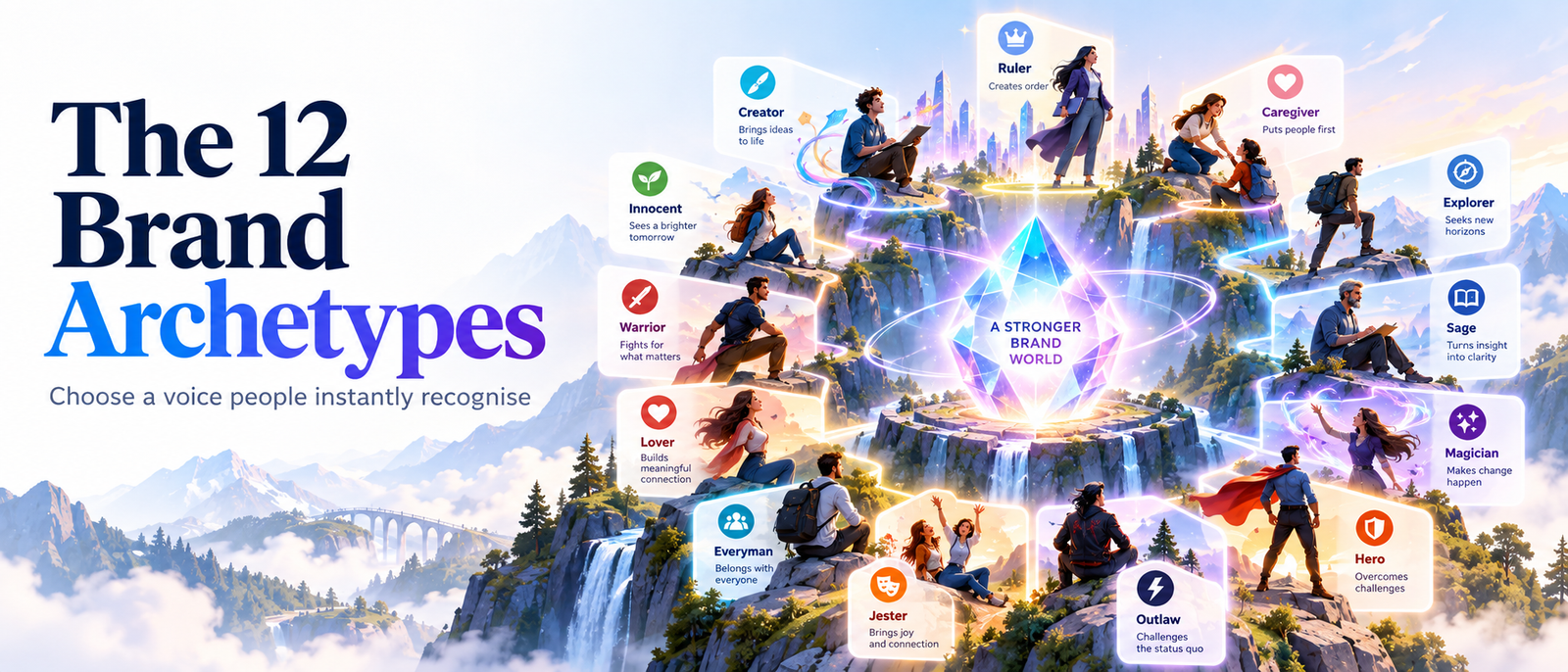
Consistent personality is a core part of successful narrative branding. The 12 brand archetypes provide ready-made character voices that audiences recognise instantly. The model draws on Carl Jung’s archetypes and was popularised for brands by Margaret Mark and Carol Pearson in The Hero and the Outlaw (2001).
- Hero: courage and mastery
- Caregiver: protection and nurture
- Outlaw: freedom and rebellion
- Creator: innovation and expression
- Sage: wisdom and clarity
- Explorer: discovery and adventure
- Magician: transformation
- Lover: intimacy and desire
- Jester: joy and playfulness
- Everyman: belonging and relatability
- Ruler: authority and excellence
- Innocent: optimism and simplicity
Brand Archetype Examples
Nike is often described as a Hero, Harley-Davidson as an Outlaw, LEGO as a Creator, and Disney as a Magician. Different analysts classify brands differently, so these are interpretations, not official labels.
How to Choose a Brand Archetype
In 2027 the strongest brands choose one primary archetype (and at most one secondary) and apply it consistently across every touchpoint. This creates a recognisable brand story that feels human rather than manufactured.
From Paid Advertising to Authentic Brand Stories
Ads alone rarely build lasting loyalty. What grows a brand is organic reach driven by real customer stories. The restaurant in the parable only began to succeed when a genuine customer video, not an ad, went viral. The menu line “Eat, don’t regret” worked because the product delivered on the promise.
Authentic customer narratives and user-generated content are among the most credible forms of brand storytelling. The non-negotiable rule stays the same: the story must be true. A beautiful narrative that the product cannot support eventually collapses.
How to Build a Narrative Brand Strategy in 2027
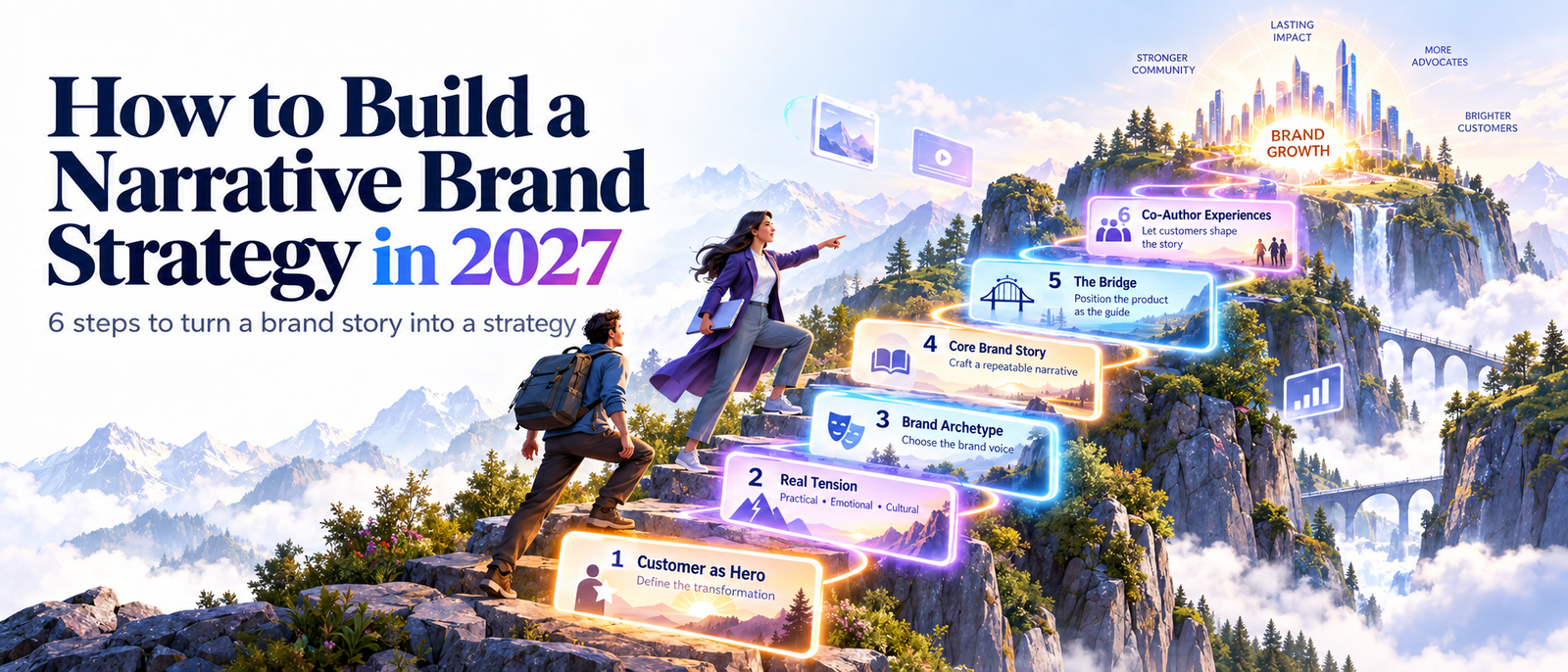
Follow these six steps to write a brand story and turn it into a strategy:
- Define the customer as the hero and the specific transformation they seek.
- Identify the real tension (practical, emotional, and cultural).
- Select a clear brand archetype to shape voice and personality.
- Craft a short, repeatable core brand story.
- Position the product or service as the reliable bridge to the desired outcome.
- Create conditions for customers to become co-authors of the brand narrative through their own experiences.
How to Control Your Brand Narrative in AI Search
AI search tools build answers from content they can find, understand and trust. Describe your brand in the same plain words across your website, social profiles and directories. Put a clear definition near the top of key pages, use structured data, name real authors, and earn mentions on credible third-party sites. No one controls what AI says, but consistency improves the odds that your story is represented correctly.
The Competitive Advantage of Strong Brand Storytelling
Technology will keep accelerating. AI will generate unlimited content. Platforms will keep changing distribution rules. Amid the noise, the brands that endure will be those that offer something older and more human: a coherent brand story in which the customer can clearly see themselves becoming better.
The decisive marketing question of 2027 is no longer “What are we selling?”
It is: What story are we inviting people to live?
Master narrative branding, choose your archetype with intention, and let authentic brand storytelling do the work that paid media no longer can.
Frequently Asked Questions About Brand Storytelling and Archetypes
What is a brand story?
A brand story is the narrative that explains why a brand exists, who it serves, and what value it delivers. It connects facts to emotion and gives people a reason to choose the brand.
What is brand storytelling?
Brand storytelling is the practice of using narrative across marketing channels to communicate a brand’s purpose and value, usually with the customer as the hero and the brand as the guide.
How do I write a brand story?
Define the customer’s goal and problem, choose an archetype, write a short core story, position your product as the guide, and support it with real customer evidence.
What is a brand archetype?
A brand archetype is a universal character type, such as Hero, Sage or Outlaw, that gives a brand a consistent personality and voice.
How many brand archetypes are there?
The most widely used model has 12 archetypes.
Can a brand have more than one archetype?
Yes. Most brand guidelines recommend one primary archetype and at most one secondary. The primary sets the core personality, and the secondary adds nuance. Mixing more than two usually makes a brand feel inconsistent.
What is the StoryBrand framework?
StoryBrand is a seven-part messaging framework by Donald Miller. It casts the customer as the hero and the brand as the guide, and it moves from a problem to a plan, a call to action, and a successful outcome.
How do I build a brand narrative for a founder-led company?
Start with the founder’s origin: the problem they faced, why existing options fell short, and what the company does differently. Then connect that story to the customer’s own journey so the brand does not become only about the founder.
How do I control my brand narrative in AI search engines?
Use the same plain description of your brand everywhere, put clear definitions near the top of key pages, add structured data, show real authors, and earn mentions from credible third-party sites. This improves the odds that AI tools describe your brand accurately.
About the Author