

AI Disinformation and National Security: When Information Became the Threat
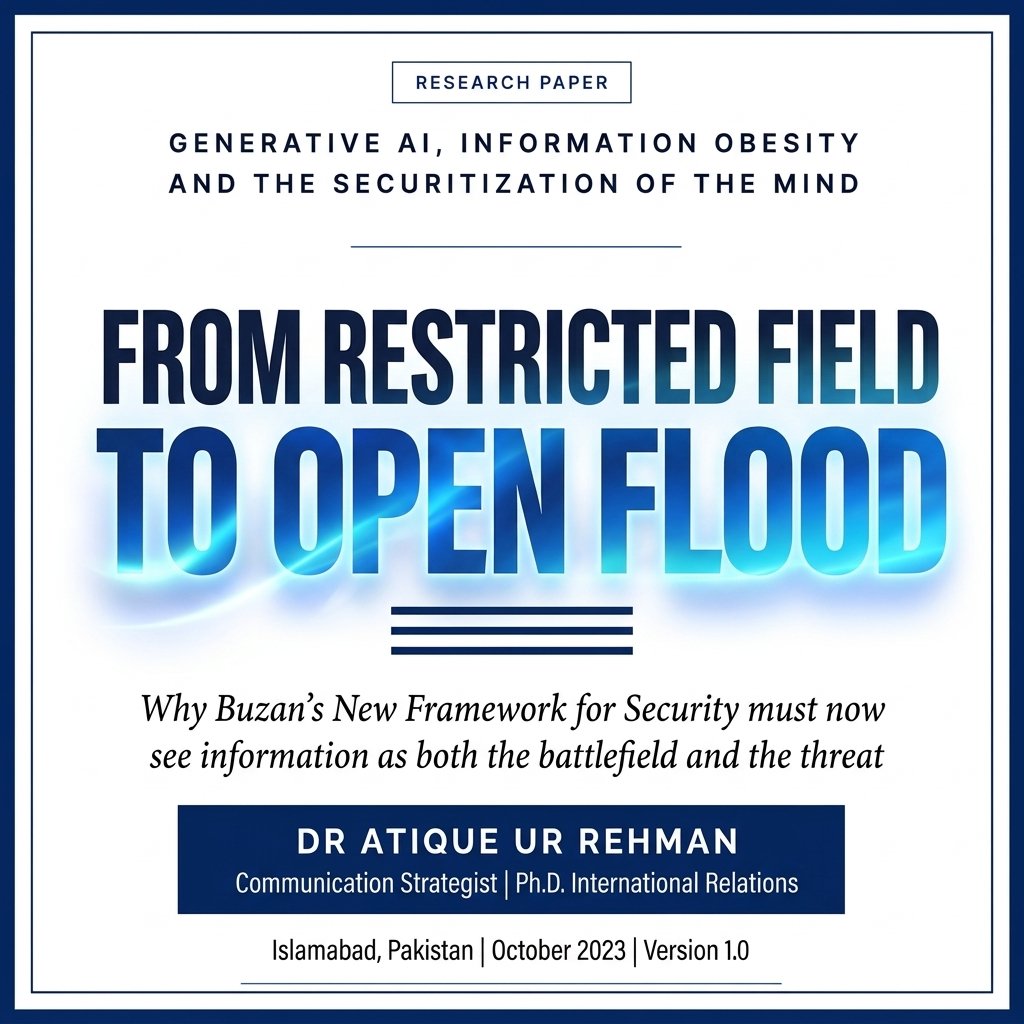
AI disinformation and national security fourth-revolution-philosophy-to-action are now tightly linked, yet our thinking about security has not caught up. In 1998, the scholars Barry Buzan, Ole Wæver and Jaap de Wilde showed that threats are not only about armies and borders, but also about politics, the economy, society and the environment. Even so, they treated information as the messenger, not the threat.
In their world, a leader announced a danger, newspapers and television carried it, and the public decided whether to believe it. A handful of editors decided what a nation worried about. I spent years inside that world, first in the state’s communication service and then on UN peacekeeping missions. I have watched it disappear.
How generative AI broke the gatekeepers
Today an algorithm decides what you see next, and it does not care whether a video is true. It only cares whether you keep watching. Since 2022, generative AI has made things worse, because more and more of that content is made by machines.
The numbers are startling. TikTok has labelled more than 3 billion videos as AI-generated. In one test, 59 per cent of the first 500 videos shown to a new account were machine-made. For children’s content, the figure was 57 per cent.
In short, we are not short of information. We are drowning in it. I call this information obesity: we consume more than ever, yet understand less.
Why AI disinformation is a national security threat
When anyone can produce anything, the old rules of security break down
. A threat can spread with no known speaker behind it. A single fake video can spark a protest, a political crisis and a currency panic in one afternoon. Meanwhile, when the state answers, its true word is doubted, because everything can now be called fake.
Consider the Indian Chronicles network, exposed by the European NGO EU DisinfoLab in 2020. It ran more than 750 fake news outlets in 116 countries for fifteen years, and even listed a professor who had died in 2006 at later events.
This is modern information warfare. That is why I argue that a nation must now protect its ability to judge what is true, which I call epistemic sovereignty. A country can hold every inch of its territory and still lose this.
The other face of the information age
There is good news, however. The same system can make a nation stronger. Honest information builds trust, and a state that tells the truth in ordinary times will be believed in a crisis. Used well, AI can also bring ground realities to decision-makers who never see them.
One warning matters above all. Protecting a society’s ability to judge must never become an excuse to control what it may think.
Read the full research paper
I have set out the full argument on AI disinformation and national security in my new paper, From Restricted Field to Open Flood. It is free to read, share and teach from. Read it here
About the Author