


Quick Note: Chinese President Xi Jinping made a three-day state visit to Washington from September 23 to 25, 2026, his first formal trip there in 11 years. President Trump greeted him on the tarmac at Joint Base Andrews, and the two governments extended their trade truce by two months, to January 10. The Trump-Xi meeting produced no major breakthroughs on trade or AI safety, but the leaders agreed to meet twice more before the end of the year.
Trump Xi Meeting: Trump Welcomes Xi With Rare Tarmac Ceremony, Trade Truce Is Extended
More Current Affairs
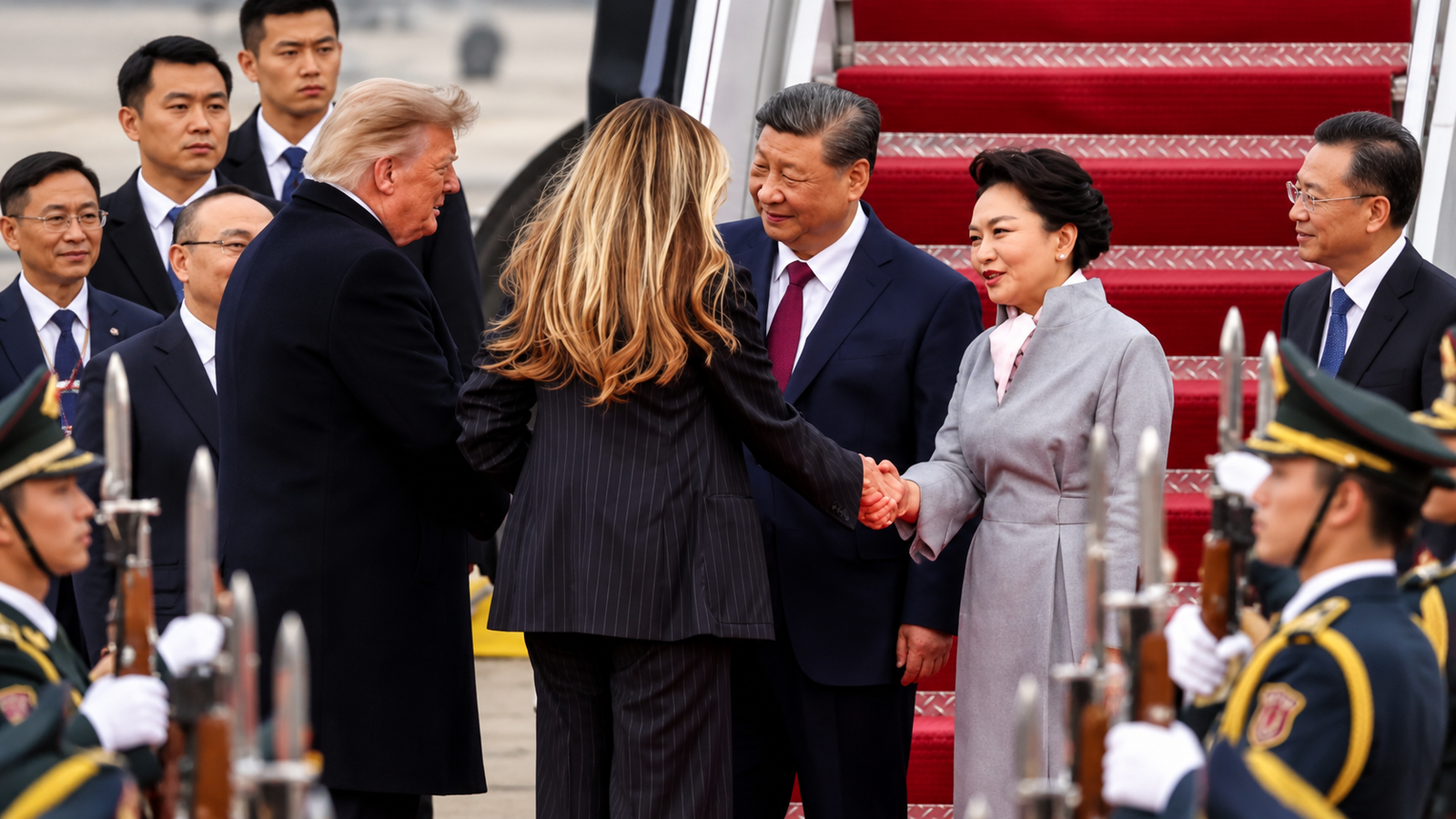
WASHINGTON: The Trump Xi meeting began on Wednesday, September 23, 2026, when Chinese President Xi Jinping landed at Joint Base Andrews and was greeted on the tarmac by President Donald Trump and first lady Melania Trump. Over three days, the two governments extended their trade truce to January 10, kept AI talks going and committed to two more meetings before the end of the year. The Associated Press reported no major breakthroughs on trade or AI safety.
Trump Xi Meeting: 5 Key Takeaways
- A rare planeside welcome. Trump greeted Xi on the tarmac instead of at the White House, with a red carpet, an honor guard and a flyover.
- Trade truce extended to January 10. The deadline moved from November 10, and a new Board of Trade will serve as an ongoing negotiating platform.
- AI talks continue without a breakthrough. An AI dialogue is under way, but no agreement on AI safety was announced.
- Iran and Taiwan remain unresolved. Both were discussed, with no announced change in policy.
- Two more meetings are planned. The leaders will meet at the APEC summit in Shenzhen in November and at the G20 near Miami in December.
Trump Xi State Visit Schedule
| Day | What happened |
|---|---|
| Wednesday, Sept. 23 | Xi arrived at Joint Base Andrews; the truce extension was announced |
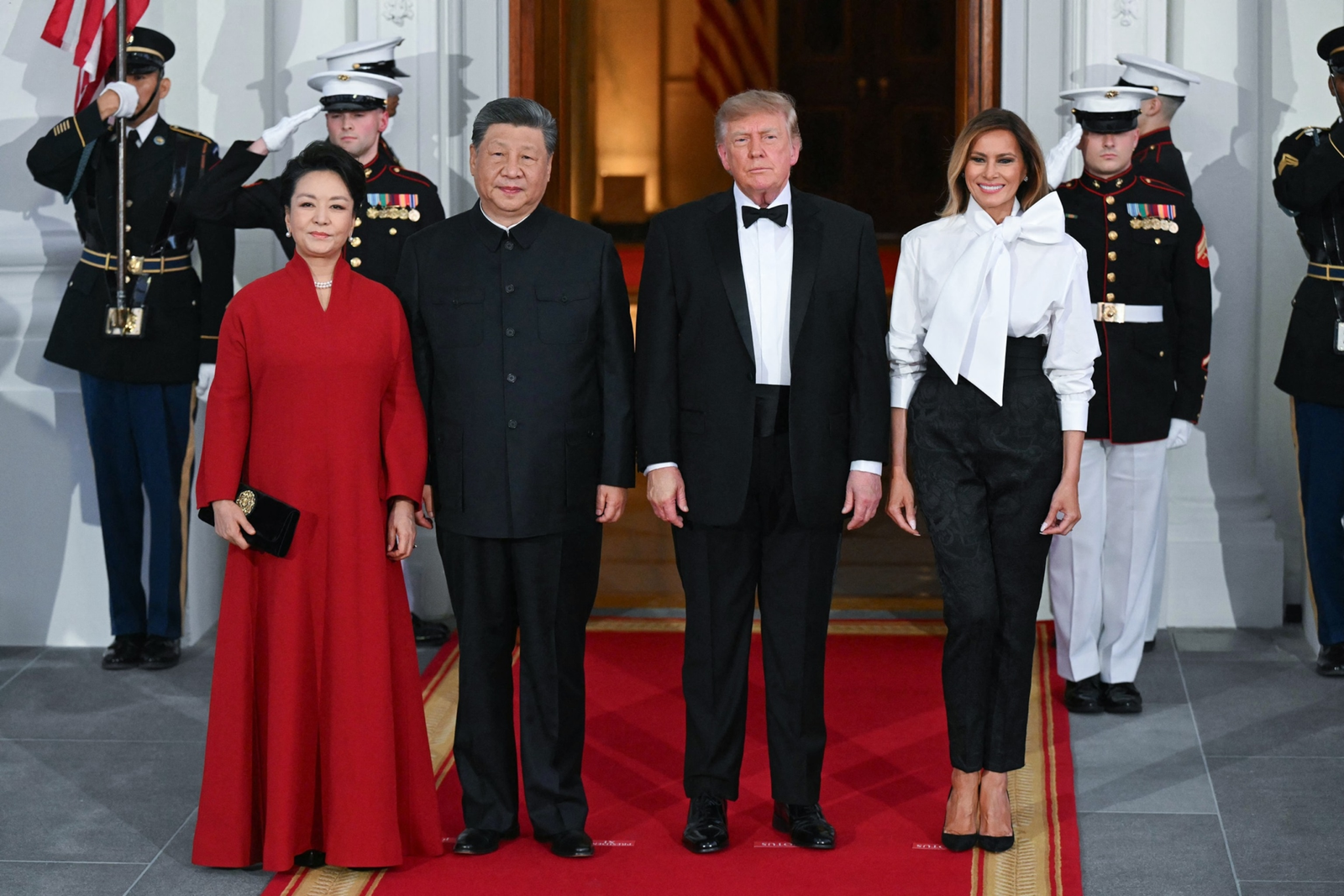
| Thursday, Sept. 24 | White House arrival ceremony, about 90 minutes of closed-door talks, and a black-tie state dinner |
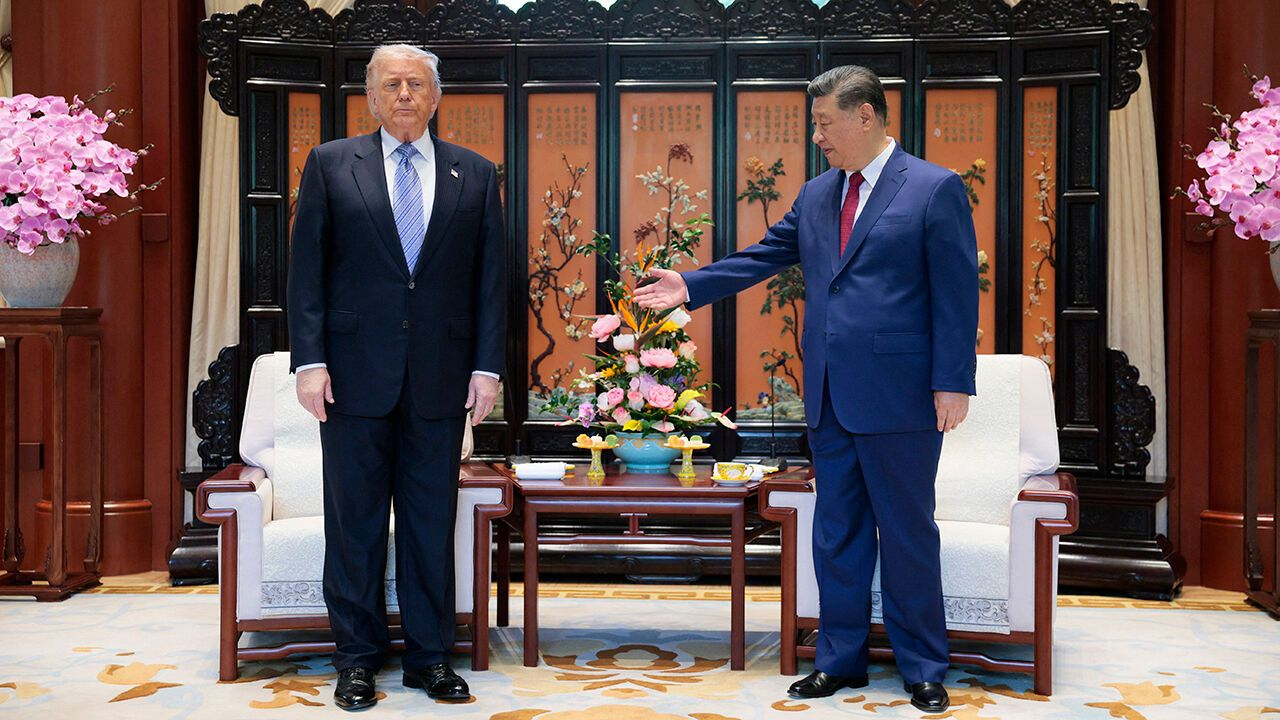
| Friday, Sept. 25 | Tea in the Red Room, a tour of the National Archives, and departure |
Diplomatic Airport Welcome Ceremony at Joint Base Andrews
A Rare Planeside Greeting
Xi’s aircraft landed shortly before 6 p.m. on Wednesday. A 100-foot red carpet ran from the aircraft stairs, with a 21-person honor guard on either side, according to the AP. The ceremony included a flyover by two B-1 bombers, platoons from each military service, and both national anthems.
Trump and the first lady greeted Xi and his wife, Peng Liyuan, with handshakes. Instead of waiting at the White House, Trump met Xi as he landed, which the AP described as a rare planeside welcome. Melania Trump told Fox News that her husband chose to greet Xi personally because of the relationship between the two leaders.
How It Compared With Trump’s Visit to China
Trump’s welcome went further than the one Xi offered him in Beijing in May. Chinese Vice President Han Zheng met Trump at the airport, not Xi. A red carpet, a military honor guard, a band and about 300 young people waving flags also greeted Trump there.
Reaction to the Welcome
Sen. Roger Wicker, chairman of the Senate Armed Services Committee, criticized the “lavish welcome” in a Senate speech. Danny Russel, a former U.S. diplomat now at the Asia Society Policy Institute, said it was a propaganda win for Beijing. Secretary of State Marco Rubio said the two countries must talk at the highest levels because they are the world’s two largest economies.
Trade Truce Extended to January

What Was Announced
Treasury Secretary Scott Bessent announced the extension on Fox News while Trump was greeting Xi. The truce, which had been due to expire on November 10, now runs to January 10. Under it, both countries scale back tariffs and refrain from imposing new trade restrictions.
Bessent said he did not know whether a bigger deal was possible or whether the two sides would simply roll over the current one. The Trump Xi meeting also helped launch a Board of Trade, which Brookings scholar Susan Thornton described as an ongoing negotiating platform.
Why the Extension Is Short
China had wanted a longer extension, the AP reported. Wendy Cutler, a former U.S. trade negotiator, said the short timeframe reflects U.S. concern about whether China is meeting its commitments on critical mineral exports and agricultural purchases. Craig Singleton of the Foundation for Defense of Democracies called it a way to make China earn the next extension.
China Rare Earth Export Controls and the Truce
Brookings scholar Mireya Solís described the outcome as an extension of the Busan compromise, which suspends Chinese export controls on rare earths and American tariffs. The Trump China trade truce traces back to that October 2025 Busan summit.
China rare earth export controls remain a pressure point. Controls introduced in April 2025 are still in place. In May, Reuters reported that exports of the heavy rare earths yttrium, dysprosium and terbium were down about 50 percent, and manufacturers were paying 1.5 to 3 times more for magnets.
Brookings scholar Ryan Hass noted that the White House readout gave no detail on removing obstacles to the regular flow of critical minerals. The European Chamber of Commerce in China welcomed the extension, saying that without it, planned export controls on rare earths would have had a crippling impact on industry.
Key Issues on the Agenda
Artificial Intelligence
Days before the visit, Bessent said the U.S. had proposed a notification mechanism for AI incidents that could affect national security. Trump has resisted calls to slow AI development, saying that would help China catch up to U.S. companies.
The AP reported no major breakthroughs on AI safety, and CNBC said the leaders avoided agreeing on how to address AI threats. Even so, Thornton wrote that an AI dialogue has launched and, according to Bessent, will meet again in November.
The Iran War
The Iran war was nearly seven months old at the time of the visit. Trump said he and Xi discussed it but gave no details. U.S. Ambassador to China David Perdue said Trump again asked Xi to avoid helping Tehran, and that any help, direct or indirect, is unacceptable to Washington.
Taiwan and Arms Sales
After the May summit in Beijing, the U.S. paused a record $14 billion arms package for Taiwan, which Trump called a “very good negotiating chip”. Washington had approved another package of about $11 billion in December.
During the visit, Xi urged the U.S. to oppose Taiwan independence explicitly, Euronews reported. Perdue later said Trump asked Xi whether he would like to buy arms and that the U.S. position had not changed. The State Department said there is no offer or plan to sell arms to China.
Military Channels and Crisis Management
Thornton wrote that the Chinese readout included language about restoring military-to-military dialogue and working on crisis management mechanisms. The U.S. side has not described these steps in the same detail.
Expert Assessments of the Trump Xi Meeting
Pomp Over Substance
Several analysts said the visit delivered more ceremony than results.
| Expert | Affiliation | Assessment |
|---|---|---|
| Scott Lincicome | Cato Institute | Called it “sound and fury but signifying nothing” |
| Jeff Moon | China Moon Strategies | Said a summit without tangible results lets China run out the clock on Trump’s second term |
| Ryan Hass | Brookings | Said Trump failed to deliver on the business at hand, citing the lack of detail on critical minerals |
| Scott Moore | Brookings | Said there was no clear progress on Iran, AI, trade or security |
A Step Toward Regular Contact
Others saw modest progress. Thornton said the visit produced substantive steps toward institutionalizing the relationship: the two further meetings, the Board of Trade, the AI dialogue and the military channels. She wrote that the pageantry was for both leaders.
Kari Heerman of Brookings warned that new mechanisms can create the appearance of progress while critical minerals and technology remain largely unsettled. Solís said the outcomes were modest but that optics and signaling mattered, especially for Japan and other Asian allies.
Beijing’s Message
In a statement marking his arrival, Xi said the two countries should be “partners, not rivals”. At the end of the visit, he said it was very successful and that China felt very satisfied.
What Comes Next for Trump China Relations
Key Dates
The next Trump Xi meeting is already scheduled.
| Date | Event | Why it matters |
|---|---|---|
| Nov. 10, 2026 | Original truce deadline | Now pushed back |
| November 2026 | APEC summit, Shenzhen | Xi invited Trump and the first lady; the AI dialogue is due to meet again |
| December 2026 | G20 summit, Trump National Doral Miami | Second meeting before year-end |
| Jan. 10, 2027 | New truce deadline | Test of China’s farm and critical mineral commitments |
What to Watch
- Whether China delivers on U.S. farm purchases
- Whether Beijing eases China rare earth export controls beyond the current suspension
- Whether the AI dialogue produces a notification system
- Whether the paused $14 billion Taiwan arms package moves forward
- Whether the Board of Trade lowers tariffs on nonsensitive goods
Frequently Asked Questions About the Trump Xi Meeting
What was agreed at the Trump Xi meeting?
The two governments extended their trade truce from November 10 to January 10 and launched a Board of Trade. They also agreed to meet twice more before the end of 2026. No major breakthroughs were announced on trade, AI safety, Iran or Taiwan.
When did Xi Jinping visit Washington?
Xi visited Washington from September 23 to 25, 2026, his first formal trip to Washington in 11 years. He arrived on Wednesday and left on Friday.
Why did Trump greet Xi at the airport?
Trump greeted Xi at Joint Base Andrews instead of waiting at the White House. Melania Trump said it was because of the relationship between the two leaders. Analysts also saw it as a way to match the welcome Trump received in Beijing in May.
How long is the U.S. China trade truce extended?
It is extended by two months, to January 10, 2027. China had wanted a longer extension.
What are China rare earth export controls?
China rare earth export controls are limits on shipments of rare earth elements, a group of 17 metallic elements used in magnets, electronics, vehicles and defense equipment. China dominates their processing, so the controls give Beijing leverage in trade talks with Washington.
Did the U.S. and China agree on AI?
Not on AI safety. The U.S. proposed a notification mechanism for national-security AI incidents, and the AP reported no major breakthroughs. An AI dialogue has launched and is due to meet again in November, according to Bessent.
When is the next Trump Xi meeting?
Trump and Xi plan to meet at the APEC summit in Shenzhen in November and at the G20 at Trump National Doral Miami in December.
Who is the president of China?
Xi Jinping is the president of China and the general secretary of the Chinese Communist Party.
About the Author